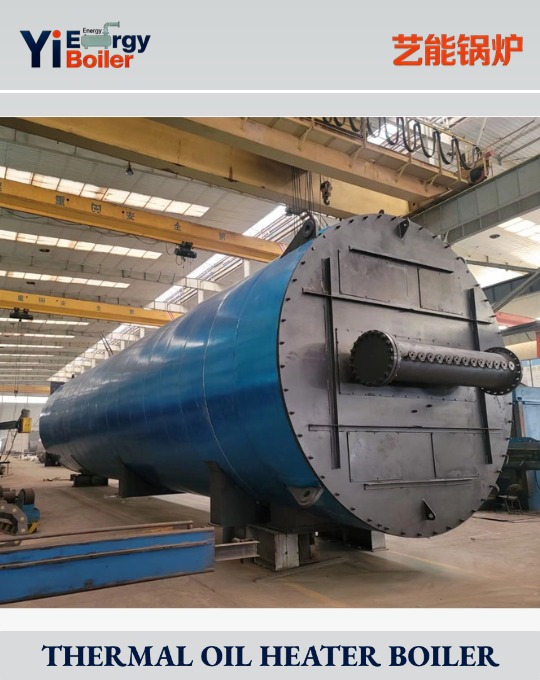
Visually, a boiler manhole appears as a circular opening with a cover, typically sealed shut during normal operation. Many people are unaware of its purpose and may even consider it redundant. In reality, the manhole serves as a crucial access point for boiler maintenance and inspection, playing an indispensable role that many technicians rely on.
The core function of the manhole is to provide maintenance and inspection personnel with access to the boiler’s interior. During prolonged operation, components like the heat transfer surfaces, drum, and piping may develop issues such as scaling, corrosion, wear, or leaks, requiring technicians to enter the boiler for inspection and repair. Manholes are typically designed with sufficient dimensions to allow technicians to enter the boiler interior smoothly, enabling comprehensive inspections, descaling, leak repairs, and other operations.
For instance, the upper section of a horizontal coal-fired atmospheric hot water boiler is usually equipped with a sufficiently large manhole. Maintenance personnel can enter the boiler body through this manhole to inspect corrosion on water walls and drums, clean internal scale and impurities, and repair pipe leaks. Without this manhole, maintenance personnel cannot access the boiler interior. They would only be able to diagnose faults through external observation, making it difficult to accurately pinpoint issues and perform thorough repairs. Over time, minor faults can escalate into major problems, compromising the boiler’s safe operation.
Additionally, manholes are essential for boiler installation and commissioning. During installation, certain internal components must be fed into the boiler through the manhole for placement. During commissioning, technicians can enter through the manhole to inspect component installations, ensuring proper setup and operational readiness.
It is crucial to note that the manhole must remain sealed and closed at all times to prevent leakage of the boiler’s high-temperature, high-pressure working fluid. It should only be opened for maintenance, inspection, installation, or commissioning. Before opening, the boiler must be shut down, cooled, and depressurized. Adequate safety precautions must be implemented to prevent accidents.