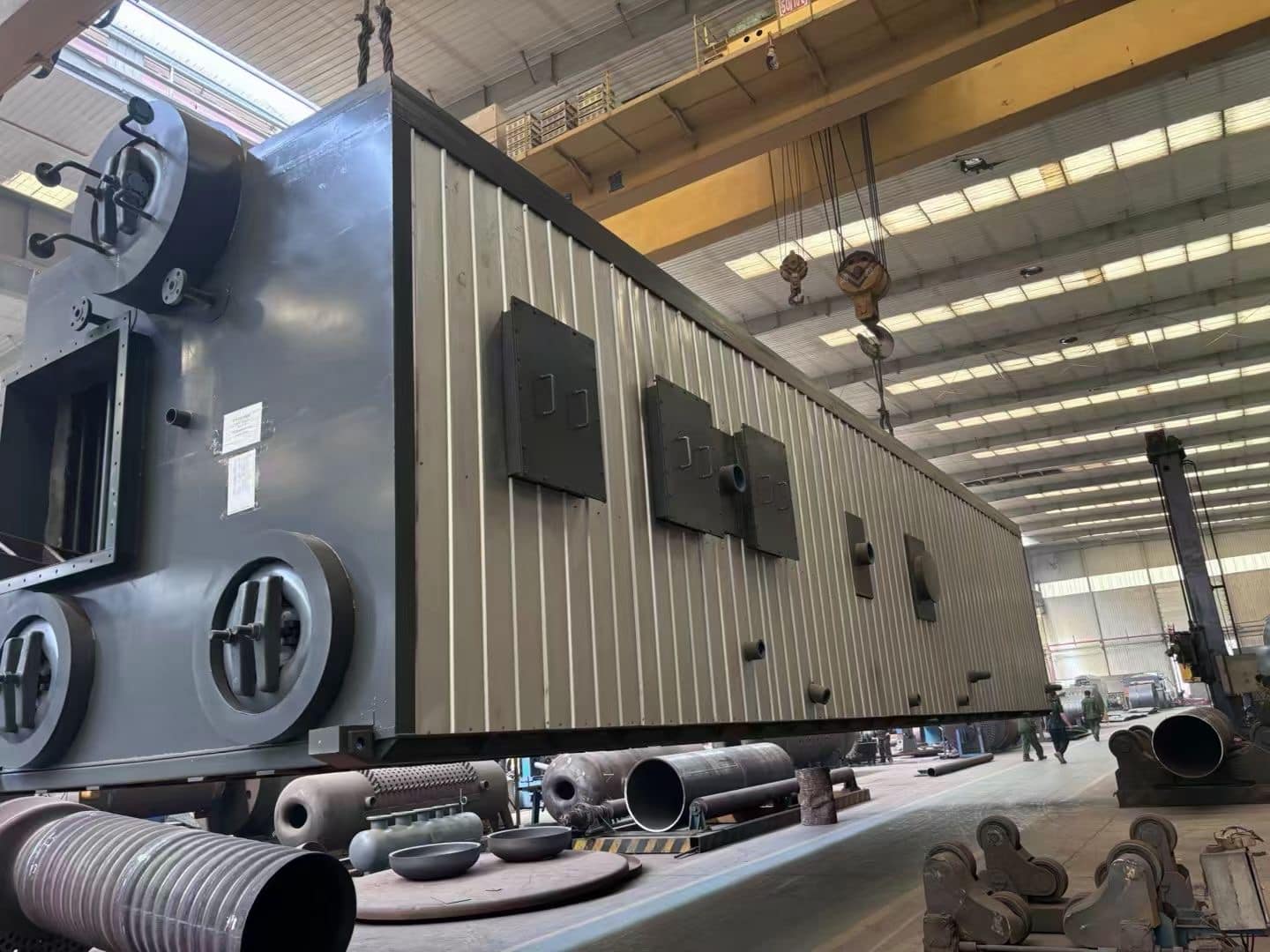
Many newcomers may overlook the function of a boiler’s blowdown valve, assuming it’s merely a “drain outlet.” In reality, its role is critical. Regular blowdown is essential for ensuring the safe and stable operation of a boiler. Neglecting this practice can lead to severe equipment failures.
The blowdown valve primarily serves two core functions: first, to discharge scale and impurities from the boiler; second, to regulate water quality within the boiler and prevent deterioration.
As we know, the working fluid (water) inside boilers contains impurities like calcium and magnesium ions. Under high-temperature, high-pressure conditions, these impurities precipitate and crystallize, forming scale deposits that adhere to the boiler’s heat transfer surfaces (such as water walls and convection tubes). Scale exhibits extremely poor thermal conductivity, hindering heat transfer and reducing boiler thermal efficiency while increasing energy consumption. Simultaneously, scale causes localized overheating of heat transfer surfaces, potentially leading to severe failures like pipe deformation or rupture, thereby compromising boiler lifespan and operational safety. The blowdown port serves to discharge these scale deposits and impurities. Through regular blowdown, scale and contaminants accumulated at the boiler bottom can be promptly removed, preventing their adhesion to heat transfer surfaces.
On the other hand, regular blowdown regulates water quality within the boiler. As the boiler operates, impurities in the working fluid accumulate, gradually degrading water quality. If water quality exceeds standards, it accelerates boiler corrosion and scaling, compromising equipment safety. Blowdown removes water containing high impurity levels while replenishing it with new, compliant water, maintaining boiler water quality within specified limits and preventing deterioration.
It is important to note that blowdown should not be performed arbitrarily. It must adhere to the principle of “regular intervals and controlled quantities.” Different boiler types require varying blowdown cycles and volumes. Generally, 1-2 scheduled blowdowns per day are necessary, with each session kept brief to avoid disrupting normal boiler operation and pressure stability. While routine blowdown may seem straightforward, it effectively prevents boiler scaling and corrosion, ensuring safe and efficient operation. This practice must never be overlooked.