The circulation process for water (in steam boilers) or thermal oil (in thermal oil boilers) is actually quite simple. The core principle revolves around the continuous cycle of “absorbing heat → transporting → releasing heat → returning.” While the circulation methods vary slightly across different boiler types, the underlying principle remains fundamentally consistent.
First, let’s discuss the water circulation in steam boilers. Steam boiler water circulation primarily falls into two categories: natural circulation and forced circulation. In naturally circulating boilers, water in the drum absorbs heat from the furnace through the water walls, forming a steam-water mixture. This mixture, being less dense than cold water, naturally rises into the drum. Steam separates within the drum and is transported to heat-consuming equipment. Meanwhile, the denser cold water flows back down the downcomer pipes to the water walls to absorb more heat, completing the natural circulation cycle.
In forced-circulation steam boilers, a circulation pump provides the driving force. It pumps cold water from the drum to the water walls. After absorbing heat, the cold water becomes a steam-water mixture and flows back to the drum for steam separation. The circulation pump operates continuously to ensure stable water circulation.
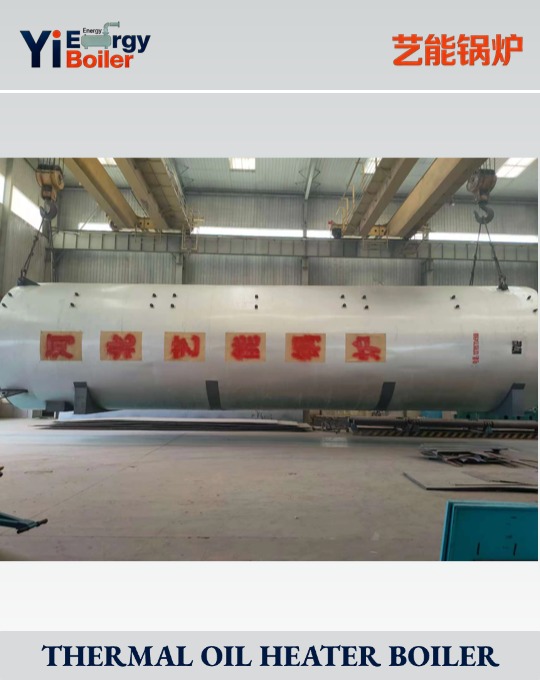
Now, let’s examine the oil circulation in thermal oil boilers. Thermal oil boilers rely primarily on thermal oil circulation pumps for circulation. Typically, two pumps are configured—one in use and one on standby—to ensure stable circulation. Thermal oil absorbs heat within the boiler’s heating coils. After temperature elevation, the circulation pump transports it to heat-consuming equipment (such as reactors or dryers). Once the thermal oil transfers its heat to the equipment, its temperature drops, and it flows back to the boiler’s heating coils to absorb heat again, completing the cycle.
Whether water or oil circulation, the core purpose remains consistent: enabling the working fluid to continuously absorb heat released from fuel combustion, then transfer this heat to heat-consuming equipment. This completes the process of heat delivery and utilization, ensuring the boiler provides stable and continuous energy supply.